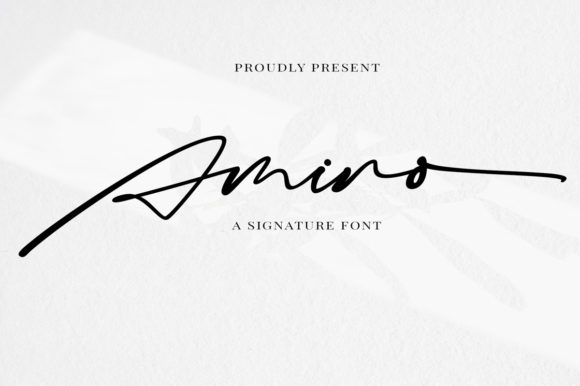
Amino: A Stylish Script Font
As a web designer, I’m always on the lookout for fonts that bring both personality and professionalism to a site. Amino caught my eye during a recent project when I was redesigning a boutique online store’s homepage. The font’s natural flow and clean design immediately stood out, making it a perfect fit for the brand’s modern yet approachable vibe.
Visual Personality and Digital Appeal
Amino is a script font with a soft, flowing style that feels both elegant and accessible. It doesn’t have the heavy embellishments of some more ornate scripts, which makes it ideal for digital use where clarity is key. The font has a friendly, handcrafted feel that adds warmth to any website without overwhelming the user.
When I first tested Amino in a hero section, I was impressed by how it balanced creativity with readability. The curves are smooth, and the spacing allows the text to breathe even at larger sizes. This makes it great for headlines, call-to-action buttons, and other prominent design elements.
Use Cases in Web Design
One of the first places I used Amino was on a product landing page for an online shop selling handmade soaps. The font worked beautifully as the main headline, drawing attention while maintaining a sense of sophistication. It also paired well with a simple sans serif font for the body copy, creating a clean contrast that made the content easy to scan.
I also experimented with Amino on a coaching website’s blog header. The font added a personal touch that felt authentic to the brand’s mission. It was especially effective when placed over a background image, where its fluidity complemented the visual storytelling of the page.
Readability and Responsive Design
One of the biggest concerns with script fonts is how they perform on mobile devices. Amino handles this well, maintaining legibility even at smaller sizes. I tested it on a button that was part of a checkout process, and it remained clear and easy to read without needing extra padding or spacing.
On dark backgrounds, Amino still held up, though I found that using a slightly bolder weight helped it stand out more. For light backgrounds, the font looked crisp and professional, making it a versatile choice for different design schemes.
Font Pairing and Brand Consistency
Amino works best when paired with a clean, neutral font. I often used it alongside a simple sans serif like Open Sans for body text. This combination created a nice balance between the decorative elements of Amino and the functional clarity of the sans serif.
For editorial-style sites, pairing Amino with a serif font like Georgia gave a more traditional, literary feel. It was especially effective for blog posts or portfolio pages where the tone needed to be both engaging and professional.
Limitations and Best Practices
While Amino is excellent for display purposes, it’s not ideal for long paragraphs of text. Using it for body copy would make the content hard to read, especially on smaller screens. I recommend saving it for headings, logos, and short phrases where its visual appeal can shine.
Another consideration is multilingual support. If you’re designing a site that serves an international audience, check that Amino includes the necessary characters for your target languages. Also, ensure that the font is available in web-friendly formats like WOFF or WOFF2 if you plan to use it on a live site.
Before finalizing a design, I always test Amino across different screen sizes and resolutions. This helps identify any issues with spacing or legibility that might not be obvious on a desktop monitor. It’s also a good idea to check how the font looks against various background colors and images to ensure it remains visually appealing in all contexts.
Final Thoughts
Amino is a strong addition to any web designer’s toolkit. Its stylish yet readable design makes it suitable for a wide range of digital projects, from e-commerce sites to personal blogs. Whether you're working on a creative portfolio or a corporate landing page, Amino brings a touch of elegance that enhances the overall user experience.